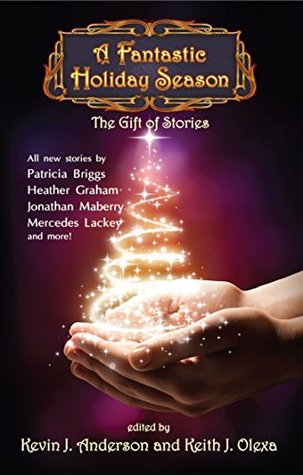
A modern retake on the classic Nutcracker. A darker twist for a fairytale.
Something about The Nutcracker has always interested me. Or at least, something about it has drawn me in from the very beginning. So to read a short story, rewritten fairy tale that features the plotline of the nutcracker completely drew me in. The fact that it was kind of dark, and incredibly fun… just made it all that much more intriguing and engaging.
About halfway through this tale, I was kind of gunning for Clara and the Nutcracker. But then the discussion of an individuals’ wants and needs came into play, and I no longer wanted them to end up together. The story quickly stopped being about a romance between Clara and the Nutcracker, and something more. A tale of finding one’s own life and path. And maybe, just maybe, breaking free of a toxic past and toxic parents…
It’s the longest night of the year, and the night that dark things stalk the halls. Especially for a student who is spending her Christmas away from her crime-fighting family in a school created for students of magic.
I first heard of Krampus a few years ago when an Austrian friend came to stay with me. She showed me YouTube footage of the celebration, and damn is it terrifying! Although, I can understand why some parents would want to tell their children the legend of Krampus – a lump of coal isn’t enough of a deterrent to stop them from being absolute terrors…
I’ve read a few of Lackey’s Valdemar series, and one of the things that I love about them is the fact that they’re kind of dark. There is no glory and sugar coating, but the story is always about someone who has some serious psychological issues and damage. It turns out that her short stories are no different. One of the girls featured in this believes that she is so naughty and evil that she deserves a visit from Krampus. Which, of course, means that all hell breaks loose. Because hey, this is a story featuring magic and mayhem.
Although The Longest Night has a dark sense overlaying the story. But, it still encompasses the spirit of Christmas. The idea of joy and love and caring for one another. At least, for me, that is something that I’ve always felt Christmas to be about…
Title: Mother of Miscreants Author: Jennifer Greylyn In: Evolve (Nancy Kilpatrick) Rating Out of 5: 3.5 (Liked this) My Bookshelves:Easy reading, Vampires Pace: Medium Format: Short story Publisher: Edge Year: 2010 5th sentence, 74th page: “I need a little break,” she told Lionel, rising gracefully from her chair and glancing meaningfully at the young-seeming man who’d called her mother.
She is the mother of all vampires, and now, with a little help from her new book, she is working on reconnecting with her children.
This was a different take on the creation of vampires – that they were created by Lilith (the first wife of Adam). That they don’t have to feed on blood. That they are just not understanding their given gifts in the world. It was certainly a take that I enjoyed and found quite refreshing.
I normally find it a little difficult to love vampires – they prey upon humans, and I don’t really find this romantic, classy or fun. So having a short story that says that they don’t have to do this, and still maintains that sense of mystery. I really liked the ideal. Actually, it would be incredibly easy to expand on this and create a full-blown series or, at the very least, novel. Especially since it’s such a novel idea (horrible pun intended).
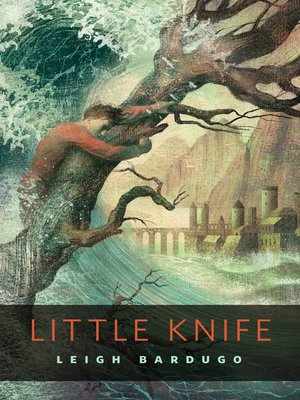
Title: Little Knife Author: Leigh Bardugo Series: The Language of Thorns (Leigh Bardugo) In: Grishaverse Companion Rating Out of 5: 5 (I will read this again and again and again)My Bookshelves:Easy reading, Fairy tales, Fantasy, Illustrated Pace: Slow Format: Short story Publisher: Imprint Year: 2014 5th sentence, 74th page: She was so beautiful, in fact, that the midwife attending her mother snatched up the wailing infant and locked herself in a linen closet, begging for just another moment to gaze upon Yeva’s face and refusing to relinquish the baby until the duke called for an axe to break down the door.
In this third Ravkan folk tale from Leigh Bardugo, a beautiful girl finds that what her father wants for her and what she wants for herself are two different things.
It is a companion story to the third book of the Grisha Trilogy, Ruin and Rising, and the stories “The Witch of Duva” and “The Too-Clever Fox.”
I thought this was going to be very traditional-feeling. The overlooked suitor keeps on trying for the beautiful, rich bride. He gets help from an unpredictable source (in this case a river), and after completing task after task, he finally triumphs. That is until you remember that this is one of Bardugo’s fairy tales and they aren’t going to be like this at all.
One of my favourite recurring moments throughout is “it wouldn’t have happened if they just asked her what she wanted”. And it honestly reminded me of all the times that what I wanted / said / needed felt like it went ignored. And I remembered that most young women have probably felt the same – prized for their beauty / standing / whatever and had their wants and needs ignored. It was certainly the issue that I had in all of the Grimm Brothers fairy tales that I’ve read recently…
Little Knife is a wonderful story with (in my opinion) a happy ending. It is a great reminder that marriage, and social standing aren’t everything. It is about not taking things for granted, and not thinking that you own something just because it has helped you. Everything, everyone has a spirit and it is far better not to trap them… in case the worst should happen.
There was a time when the woods near Duva ate girls…or so the story goes. But it’s just possible that the danger may be a little bit closer to home. This story is a companion folk tale to Leigh Bardugo’s debut novel, Shadow and Bone.
I love the notes of a traditional fairy tale throughout this story. The idea of “don’t go into the woods”. Be careful of the wicked witch. A young girls’ life being turned upside down by the remarriage of her father (after the mother has passed away). But this is where many of the similarities end.
The Witch of Duva goes to show that sometimes the danger is actually a lot closer to home than we realise. That the big unknown isn’t actually what’s scary and dangerous. It turns the traditional tales and themes on their head. Nadya is sent off in to the woods to protect her. Her step mother acts the way she does for a completely unexpected reason.
Bardugo does an amazing job of rewriting fairy tales with a spin, that, at least for me, feels far more realistic than the traditional stories. And this tale tells us that it is often that which is close to home that is the more terrifying and dangerous…
I know every hidden path through these woods. Trust me. There is no griffin in this forest.
Hunted by Lord Mortlake, Tom, Quinn, Elanor and Sebastian flee for cover. The unicorn leads them into the darkness of the Witchwood where the wolves howl. Can Wilda the witch be trusted?
Danger surrounds, but there’s not time to lose. The four unlikely heroes must find the griffin, dragon and sea serpent before it’s too late.
After finding the unicorn, the four young heroes on their impossible quest set off to find a Griffin. I love the mixture of fantasy and growing up that are intertwined in this journey. Even though this is only the second book in the series, the four children have already begun to accept each other for their strengths and flaws – the bickering has already almost stopped.
Something about this story that I love is the fact that the main characters who bicker and fight are the two boys – the girls (who, let’s be honest) are often cast into the “bitchy” roles towards one another don’t have any of these issues. Actually they quietly and quickly accept each other from the very beginning.
Wolves of the Witchwood, for an adult, is an incredibly easy, breezy and simple read. I spent a few nights reading it before bed when I needed to switch off, but was too tired to actually concentrate on anything. It’s the perfect addition to your shelf for those people who like a quick, easy read. Or the perfect addition to a children’s shelf.
Ayama’s sister is beautiful, and she is often forgotten. Until the day that the King needs a messenger to go and negotiate with his beast of a son… then her entire world is changed.
Most stories, fairy tales, really anything that I read features a pretty girl. She is gifted by grace, beauty, kindness, yadda, yadda, yadda. But not so with this reimagined fairy tale story. This is all about the ugly (and somewhat forgotten) ugly sister.
Ayama isn’t beautiful, her voice sounds horrible, and even her parents are kind of freaked out by her. She’s a lot more like everyone else in the world, and it’s kind of nice to read about someone who isn’t beautiful. But she does have all of the characteristics that I have become used to in a lead girl in a fairy tale. Ayama is kind, and humble. She has a strong moral and ethical compass. And she isn’t afraid to love. Everything that a young girl should actually aspire to be.
Although there is a major point throughout the story of the difference in perceptions and acceptance of siblings, this isn’t actually seen to cause a rift between the two siblings. The sisters still love each other and treat each other with respect, even when the parents are a little lacking in this. Normally I would expect a level of bitterness throughout, and it was incredibly refreshing to not come across this.
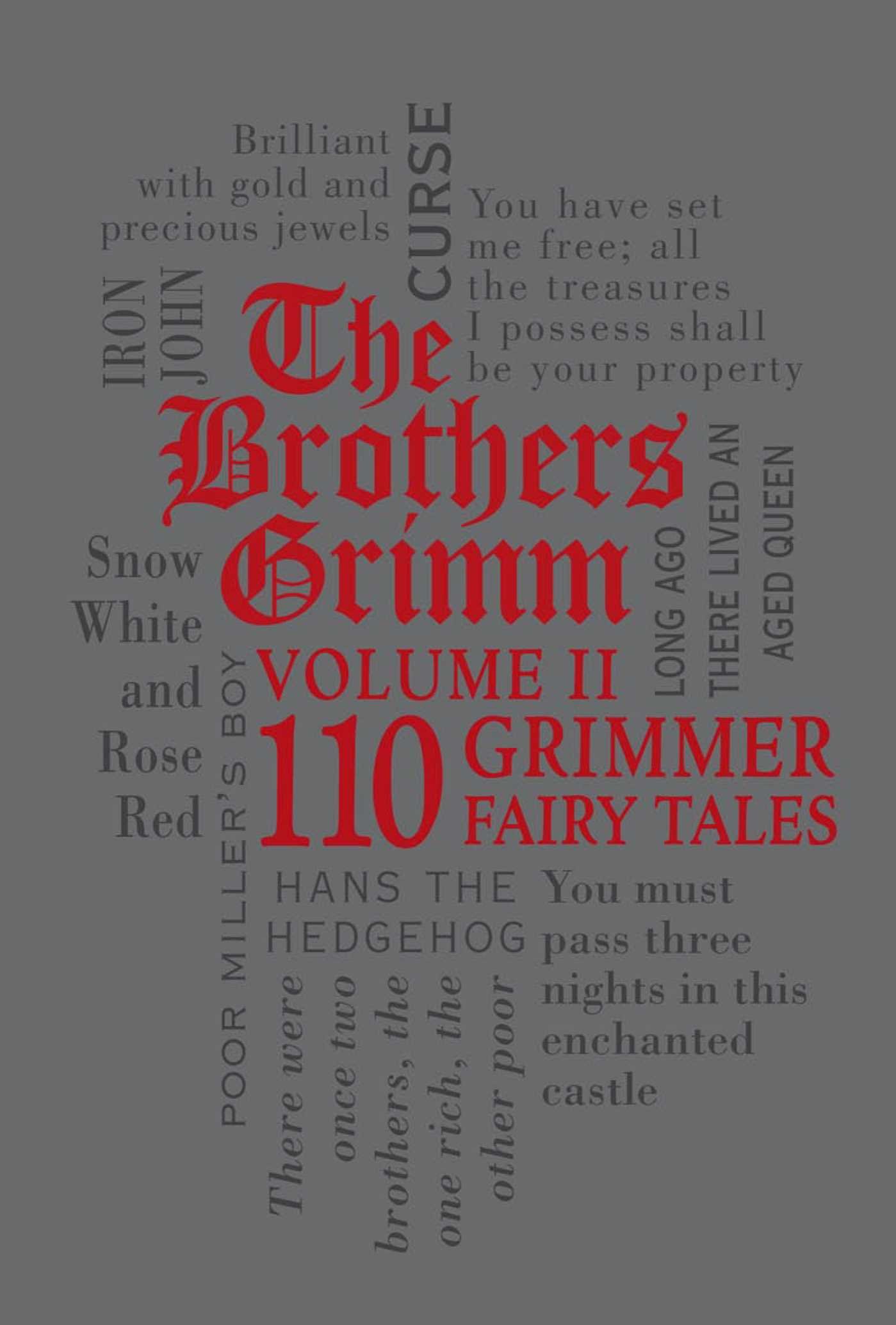
Title: 110 Grimmer Fairy Tales Author: Brothers Grimm Series: Word Cloud Classics Rating Out of 5: 5 (I will read this again and again and again) My Bookshelves:Classics, Easy reading, Fairy tales, Short story collections Pace: Slow Format: Collection Publisher: Word Cloud Classics Year: 1819 5th sentence, 74th page: So she did the old woman’s bidding, placed herself at the window and looked on the distant country, as if she were very sorrowful.
We all know the stories — or do we? We know who Snow White is, but what about Rose Red? And what happens to an all-too willful child? Learn more intriguing stories about “Wise Folks,” “The King’s Son Who Feared Nothing,” and . . . well . . . “Donkey Cabbages”–to name a few. Jacob and Wilhelm Grimm were well-known nineteenth-century German storytellers, academics, linguists, and cultural researchers who did not hold back when telling terrifying tales, including parables and fables designed to teach and entertain readers of all ages.
The Brothers Grimm Volume 2: 110 Grimmer Fairy Tales is perfect for the short story lover, and offers many entertaining tales to delight–and fright–literature lovers.
There seems to be a lot of stupid Hans’ in this collection. Or at least a patch towards the later middle that has a lot of stories that feature a dumb young man named Hans. And the recurrent theme seemed to be honesty, truth and fairness. Give to others. The typical ideas of fairy tales that I grew up with. Just with a far more twisted take and journey.
It’s a little difficult for me to seriously review a collection of traditional fairy tales. The things which normally trigger me and make me frustrated are rife throughout (stories of women beating, princess needing saving, etc.). But it is a different time, and I don’t really believe in rampaging about ideals of different times and places. The fact that the underlying message and themes are all about integrity and honesty. Not taking others for granted. Treating people as you wish to be treated. The kinds of things that I love to see perpetuated through tales, stories and journeys.
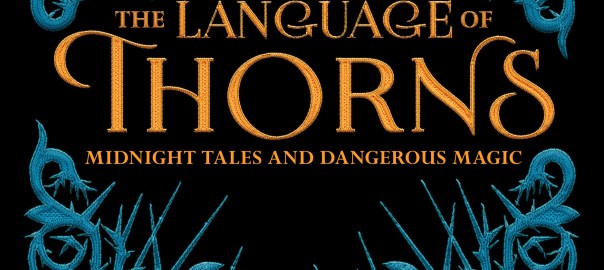
Travel to a world of dark bargains struck by moonlight, of haunted towns and hungry woods, of talking beasts and gingerbread golems, where a young mermaid’s voice can summon deadly storms and where a river might do a lovestruck boy’s bidding but only for a terrible price.
Inspired by myth, fairy tale, and folklore, #1 New York Times–bestselling author Leigh Bardugo has crafted a deliciously atmospheric collection of short stories filled with betrayals, revenge, sacrifice, and love.
Perfect for new readers and dedicated fans, these tales will transport you to lands both familiar and strange—to a fully realized world of dangerous magic that millions have visited through the novels of the Grishaverse.
This collection of six stories includes three brand-new tales, all of them lavishly illustrated with art that changes with each turn of the page, culminating in six stunning full-spread illustrations as rich in detail as the stories themselves.
I found it almost impossible to put this damn book down. Which is a little problematic… since I have a whole heap of other productive things to do… the illustrations in this version just helped to make it ten thousand times more difficult to put down.
I’ve been on a bit of a fairytale binge lately. But there is always something that sits a little funny when I read the old school stories. They don’t really feature strong women, or women with any kind of power at all. Bardugo’s versions were completely different. They were dark and twisted. They featured women with power and independence.
One of the tales throughout this constantly says, it all would have been different if they’d just asked her what she wanted… and this works brilliantly as a theme throughout the entire collection.
The only disappointing thing about this novel was that it ended. I sat there staring into space for ages, wondering when I would next find such an amazing read… luckily there is a whole series to sink my teeth into now!
Tom is bored with his life in the Irish countryside. Until he runs into Doreen. Then everything changes in the blink of an eye and he dares to dream of a brighter future.
I love when you read a nice, simple, homely story. And just finish it… smiling. Nothing else, just quietly smiling to yourself. The fact that this was the final tale in The Mammoth of Irish Romance collection just made it all that much more sweet and endearing.
There are almost two storylines happening throughout this tale. That of Tom and Dorreen’s plight against the fae and that of their meeting in real life. The fact that they are both realities and crossover beautifully at the very end was something that I enjoyed monumentally. As I enjoyed the way in which you’re not truly certain if their visit to the fae is merely a dream or something more… until those very final moments.
An incredibly fitting end to a wonderful collection of romantic tales.