Tag Archives: Marine

Filming the Diving Boobies

Originally published by ReefWatch SA on 6 June 2016.


http://www.arkive.org/brown-booby/sula-leucogaster/image-G58180.html

It seems like every week there is a new way that technology is helping us to understand the world around us. From flying drones to genetic testing, advances in technology are allowing us to see the world in a new light and new ways. This month, the wonders of technology have helped us to better understand Boobies, predatory seabirds who feed on squid and fish.

A group of researchers from around the world, led by The University of Sydney used GPS loggers, tiny cameras and nutritional information to see how climate change has affected their hunting abilities. Warming temperatures and ocean acidification are changing the migratory patterns and ranges of fish, squid and marine invertebrates across the world. This means that predators such as the Masked Booby need to change their own patterns of movement.

Predators often balance the need for energy with the energy expended when hunting. Think of cheetahs that all of a sudden stop chasing a gazelle. They may be able to catch their prey, but if the energy they use to do it is higher than the energy they will gain from the food, then this becomes pointless. The same principles apply to all predators. Masked Boobies catch their prey (mostly fish), by diving on top of the hapless fish. Travelling across the ocean from their breeding sites requires a lot of energy (after all, flying can’t be easy), so it is a very intricate balance between energy used and energy gained.

With the movements of fish, the research team found that Masked Boobies are currently travelling an average of 50 km from their breeding sites to hunt. The research team used a combination of camera data and nutritional information to judge how this energy exchange occurs and also to better understand what species of fish these Boobies tended to consume. This is going to be very useful information with the future predictions of climate change – the more we understand, the easier it will be to protect these beautiful creatures against future climatic issues.

Original research:
Machovsky-Capuska et al. (2016) Coupling bio-logging with nutritional geometry to reveal novel insights into the foraging behaviour of a plunge-diving marine predator. New Zealand Journal of Freshwater and Marine Research. DOI: 10.1080/00288330.2016.1152981
Rising Sea Levels – Are We the Culprits?

Originally published by ReefWatch SA on 5 May 2016.


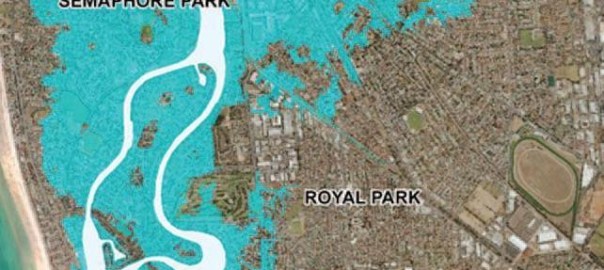
Photo: Climate Commission

We’ve all heard a tonne of different reasons for rising sea levels – climate change, a delayed reaction to the last ice age, a natural change in our surrounds and climate (because, after all, the world changes). But what’s the scientific evidence to back this up? Do we really know the reason behind rising sea levels? Is it a little bit our fault, but a little bit inevitable? It’s a constant debate in the media, and I’m sure as ocean lovers (like myself), it is a question that you also ponder. Are rising sea levels my fault, or is it something else?

Well, a recent study has found that it wasn’t our fault pre-1970. CSIRO researchers found that from the 1950s to the 1970s, rising sea levels were mostly caused by a delayed reaction to the warming that followed the ‘Little Ice Age’ (1300 – 1870 AD). This accounted for approximately 70% of the increase in sea levels across the world. However, after 1970, less than 10% of measured rises were due to this delayed reaction. So what, I hear you ask, has caused an increase in sea levels in the past 45 years?

Yes, you guessed it, it turns out that we are, in fact to blame for such a drastic change in sea levels. The effect of humans, via global warming, on sea level rises for the period of about 1870 – 1970 is actually quite low, accounting for only 15% of the problem. But since 1970 this has become over 70% of the driving force behind rising sea levels, and the subsequent loss of homes, infrastructure and coastal stability.

There are a number of reasons why the sudden increase in greenhouse gases and aerosols have increased sea levels but primarily this is because of the increase in temperature. Not only does it lead to the melting of the ice caps in the Arctic and Antarctic, and glaciers around the world, but it also, quite literally, expands the water. You know how your drink bottle will expand (and sometimes even explode) if you leave it in a hot car all day? Well, the same principle applies here – heat means expansion, and in the case of the ocean, expansion means rising sea levels.

So, it’s because of us that sea levels are rising so drastically. But, as always, it’s not all doom and gloom. You can do your part to help – you may not think that one person’s actions can change the world, but it can. And being one of millions to take a few minor steps in cutting your greenhouse emissions and carbon footprint will make a HUGE difference to our planet – and to the safety of our beloved, Australian coast.

Original research link.

Are the Oceans Becoming Quieter?

Originally published by ReefWatch SA on 31 March 2016.

Image: https://en.wikipedia.org/wiki/Alpheidae

Original research article: http://rspb.royalsocietypublishing.org/content/283/1826/20153046

If you love marine life (which you obviously do since you’re getting the Reef Watcher), then you’ve heard about ocean acidification. Actually, I think that just about everybody has heard about it. And every time we turn around, scientists have discovered a new problem associated with it. Or at least that’s how it seems because it turns out that ocean acidification is now silencing our oceans. Who knew?

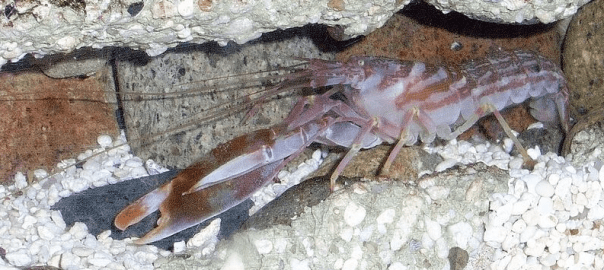
To make more sense of this phenomenon, you probably need to know what sounds we’re talking about. And weirdly enough, you’ve probably all heard them – you just haven’t realised what you are listening to. It’s shrimp. Snapping shrimp to be exact. This video explains it really well: https://www.youtube.com/watch?v=PCW789vj7t4&feature=youtu.be

Basically, it’s the crackling sound that people sometimes hear near and within the ocean – that’s snapping shrimp. They are one of the loudest invertebrates in the ocean and create the ‘snapping’ or crackling sound by closing their claws very fast. This creates an air bubble that can release a sound of up to 210 dB! That’s the equivalent of an earthquake with a Richter scale of 2.0 and is louder than a rocket launch! And at 194 dB, sound waves become shock waves! They normally use this phenomenal talent to catch prey or scare off predators. But this sound is important in another way – baby fish also use this sound to navigate the sea.

Not only will snapping shrimp be in more danger if they don’t ‘snap’ frequently, but it could also have larger effects on the ecosystem. If baby fish can’t navigate through the oceans, then they are far more likely to become someone else’s lunch. Sound is the most reliable way to navigate in the water since light and smells can become distorted in the currents. Sound also travels thousands of kilometres, unlike water, which travels a few metres.

How is a rising CO2 level in the water changing the sound I hear you ask? Well, three researchers from Adelaide University, Mr. Tullio Rossi, Associate Professor Ivan Nagelkerken and Professor Sean Connell, studied the snapping shrimp surrounding volcanic vents in three locations off the coast of New Zealand. These vents are natural sources of CO2 and give us a fairly important insight into the effects that ocean acidification could have. The CO2 levels around these areas are equivalent to what scientists have predicted will be observed in 2100.

It was found that snapping shrimp made a smaller and less frequent noise when they were in locations with more CO2. No physical differences were found in these shrimps, meaning that something about this level of carbon dioxide within the water affects their behaviour. In other words, more carbon dioxide means less noise. If the world keeps warming as it has, this will turn our happy, clappy reefs into silent, directionless areas.

Not an outcome anybody wants.

Blue Urbanism by Timothy Beatley

Overview

Blue UrbanismTitle: Blue Urbanism: Exploring Connections Between Cities and Oceans

Author: Timothy Beatley
Rating Out of 5: 4 (Really good read!)
My Bookshelves: Science, Conservation, Non-fiction
Pace: Slow
Format: Novel
Publisher: Island Press
Year: 2014
5th sentence, 74th page: Looking down from above gives the sense that it is just another farm field or market garden.

Buy The Book Now at The Book Depository, Free Delivery World Wide

Synopsis

Blue Urbanism offers a comprehensive look at the challenges, solutions, and great potential for urban areas to integrate ocean health into their policy and planning goals. Equal parts inspiration and practical advice, it explores the question: What would it mean to live in cities designed to foster feelings of connectedness to the ocean?

Thoughts

I was surprised by how much I enjoyed this book and was inspired by it. I love reading conservation and science based books, but I wasn’t really certain about the premise of ‘Blue Urbanism’. However, from the first paragraph, I was completely hooked. I read it from cover to cover in two hours (at the detriment to the things I should have been doing, like study and housework…)

Beatley broke down the chapters wonderfully. They were distinctly different, but wove into one another so that you could follow his argument and point. The preface also helped to place his point in context and let you know what you were getting yourself into. It’s always nice when you can read a preface (or blurb) and say “yes, this is the book for me”.

Each chapter not only outlines Beatley’s argument, it also provides some great examples of areas across the world that are using his ideas. In chapter seven, when he is discussing the idea of citizen science in marine conservation, he discusses the Dolphin Watch program in Perth. I found this incredibly helpful. Not only are you being inspired by new ways to protect our gorgeous oceans, you also get examples of ways that this is already happening. It’s a healthy dose of optimism in an otherwise complex and very serious issue.

I really enjoyed the pace of this book and the ways in which it inspired me. I find with some science or conservation based books, they are a little dry and inaccessible to people who don’t have a writhing passion for its topic. Luckily, I generally have that desire, so it doesn’t bother me. But I would rarely recommend these books to my friends and family – they get bored a little too easily. I would easily recommend Blue Urbanism. Beatley covers the issues well, without harping on. He also shows the reader how serious the consequences can be if we don’t start employing Blue Urbanism in our coastal cities; but it’s not all doom and gloom. He has a healthy dose of hopefulness for the future and in being so sanguine about our potential, he inspires you to get off your butt and do something.

This is definitely one of the better science based books I’ve read in a long time and is definitely worth sinking your teeth into. Especially if you live near the coast.

<- More science book reviews More conservation book reviews ->
Image source: Amazon