
Tag Archives: Anthropology

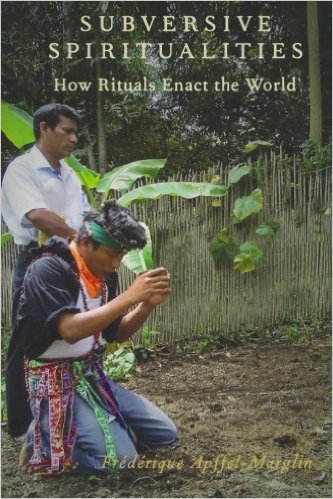
Subversive Spiritualities by Frederique Apffel-Marglin

Overview

Subversive Spritualities

Title: Subversive Spiritualities: How Rituals Enact the World
Author: Frederique Apffel-Marglin
Rating Out of 5: 4 (Really good read!)
My Bookshelves: Anthropology, Mythology, True stories, Non-fiction
Pace: Slow
Format: Ethnographic text
Publisher: Oxford University Press Inc
Year: 2012
5th sentence, 74th page: It goes much further than simply the health of an individual.

Buy The Book Now at The Book Depository, Free Delivery World Wide

Synopsis

Even in the twenty-first century, some two-thirds of the world’s peoples quietly live in non-modern, non-cosmopolitan places. In such places the multitudinous voices of the spirits, deities, and other denizens of the other-than-human world continue to be heard, continue to be loved or feared or both, continue to accompany human beings in all their activities. In Subversive Spiritualities, Frederique Apffel-Marglin draws on a lifetime of work with the indigenous peoples of Peru and India to support her argument that the beliefs, values, and practices of such traditional peoples are ”eco-metaphysically true.” In other words, they recognize that human beings are in communion with other beings in nature that have agency and are kinds of spiritual intelligences, with whom humans can be in relationship and communion.

Ritual is the medium for communicating, reciprocating, creating and working with the other-than-humans, who daily remind the humans that the world is not for humans’ exclusive use. Apffel-Marglin argues that when such relationships are appropriately robust, human lifeways are rich, rewarding and, in the contemporary jargon, environmentally sustainable. Her ultimate objective is to ”re-entangle” humans in nature, by promoting a spirituality and ecology of belonging and connection to nature, and an appreciation of animistic perception and ecologies. Along the way she offers provocative and poignant critiques of many assumptions: of the ”development” paradigm as benign (including feminist forms of development advocacy), of most anthropological and other social scientific understandings of indigenous religions, and of common views about peasant and indigenous agronomy. She concludes with a case study of the fair trade movement, illuminating both its shortcomings (how it echoes some of the assumptions in the development paradigms) and its promise as a way to rekindle community between humans as well as between humans and the other-than-human world.

Thoughts

This book was such a unique experience for me – it was an engaging and insightful look into phenomenological ethnography. For those of you who don’t know (as I didn’t when I started reading this book), phenomenology is the different ways in which we view the world. Our phenomenological understandings of our realities are shaped by culture, personal experience and spiritual considerations, amongst other things. Ethnographies, of which I have read a few, are anthropological texts. Ethnographies involve the author immersing themselves into another’s culture and life. Here they participate and observe at the same time, at once part of the group and separate.

I found this ethnography to be really theoretically engaging, and whilst I have read others, this is the one that left me thinking for a long time after I closed its pages. Not only did Apffel-Marglin open up a whole new realm of studies and theoretical points upon which to pursue my own research, it also introduced me to the world of agriculture in the Peruvian Andes. I loved the combination of scientific understandings and cultural knowledge in the care for these passionate people’s environment. And delving into such a wonderful blend of objective and subjective knowledges of the world struck a chord deep within me. So much so that I used this idea within my own Anthropological Honours thesis.

Not only was the subject matter of Subversive Spiritualties highly engaging, Apffel-Marglin’s writing style was incredibly engaging – you couldn’t help but be pulled into the world she so vividly describes. It was also highly appreciated that she was so aware of her own biases. It helped to highlight my own cultural biases and the ways in which our views of the world completely colour everything that we experience and see.

<- More non-fiction reviews More anthropology reviews ->
Image source: Amazon

Grave Secrets by Kathy Reichs

Overview

Grave Secrets

Title: Grave Secrets
Author: Kathy Reichs
Series: Temperance Brennan #5
Rating Out of 5: 4 (Really good read!)
My Bookshelves:
Anthropology, Science, CrimeStrong women
Pace: Fast
Format: Novel
Publisher: Arrow Books
Year: 2002
5th sentence, 74th page: He pushed a blue pin into the map.

Buy The Book Now at The Book Depository, Free Delivery World Wide

Synopsis

In the searing heat of Guatemala, Dr Temperance Brennan must harden herself against the horrors she excavates.

And then four young girls go missing from Guatemala City.

When a skeleton is found at the back of a rundown hotel, only someone with Tempe’s expertise can deduce the identity and cause of death.

But as she searches for answers, her path is blocked at every turn. It is clear that some people will stop at nothing to keep Guatemala’s secrets buried.

Thoughts

Every time I think that I have a handle on the legal system outlined in the Temperance Brennan books, Reichs seems to throw a spanner in the works. I finally get my head around the system de Montreal, then we move to America, then we investigate a plane crash, and finally we move onto the jurisdictional system of Guatemala. It’s always great when you learn while reading!

Discovering more about a third-world, corrupt government and its jurisdictional system was incredibly fascinating (and also made me grateful to live in Australia). Reichs’ adeptness at describing the criminal workings of different countries is a great way to further the storyline – but it is also an awesome reminder of this woman’s intelligence and work in the field of forensics. Actually, it was Kathy Reichs’ work that first interested me in Anthropology and Forensics…using Guatemala as a backdrop in the fifth book is an amazing contrast with the preceding four books. So, not only did I learn something new, I was also transported into a world that is totally foreign to me.

Most good stories have a romantic subplot, even though I like to scoff at them, sexual and emotional tension between characters really helps to progress the storyline. It also helps to pull you in. The Temperance Brennan series is no different, there is constant tension between Tempe and Detective Andy Ryan throughout the stories and every time you think that something is about to happen, something prevents it (can you say frustrating?). This makes the introduction of Sergeant-detective Bartolome “Bat” Galiano a welcome one. More steaming sexual tension and I lapped it all up. Reintroducing Andy Ryan into the storyline helps to build this tension, and at the end, finally, finally, Tempe makes her decision. But, as a masterful writer, Kathy Reichs doesn’t let you know who it is. You have to read the next book in the series first. And even then, it takes a while to discover just who Brennan chose.

<- Fatal VoyageBare Bones ->

Image source: My Bookshop

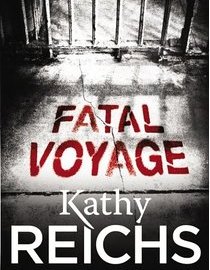
Fatal Voyage by Kathy Reichs

Overview

Fatal Voyage

Title: Fatal Voyage
Author: Kathy Reichs
Series: Temperance Brennan #4
Rating Out of 5: 4 (Really good read!)
My Bookshelves:
Anthropology, Science, CrimeStrong women
Pace: Fast
Format: Novel
Publisher: Arrow Books
Year: 2001
5th sentence, 74th page: The construction was as solid as London’s Newgate prison.

Buy The Book Now at The Book Depository, Free Delivery World Wide

Synopsis

A plane crashes high in the mountains of North Carolina. But then a severed foot is discovered a good distance from the crash site…

Forensic anthropologist Dr Temperance Brennan is first on the scene. The task that confronts her is a sad and sickening one, and her investigation seems to be throwing up more questions than answers.

But when Tempe makes a discovery that raises dangerous questions, her professional standing is threatened. Convinced that another corpse lies in the woods, Tempe pits herself against a conspiracy of silence, and uncovers a shocking tale of deceit and depravity…

Thoughts

Fatal Voyage helped to ease some of the frustrations of Deadly Decisions; it bought Andy Ryan back to the forefront of the story. I was really enjoying the courting dance of the two main characters throughout the series, and this addition to the series extended on it. Aside from the character connections, I also really enjoyed discovering what happens when there is a plane crash. Logically I knew that there are a lot of people who have to be involved in the retrieval process, but actually learning the intricacies of this, at least for America was really cool.

To keep the plot line interesting (because a massive plane crash and the return of a potential flame isn’t all on its own…) Reichs added in a nice, healthy dose of conspiracies and people in power. Which, of course Brennan finds herself in the middle of. Yes, it was a little predictable, but it was interesting nevertheless. Sometimes predictability in books can still be harnessed to create a fascinating storyline that you can’t help but be enthralled by. And since Reichs is such a phenomenal writer, she managed to maintain the feeling of anticipation right throughout.

For me, Fatal Voyage was special because of Temperance Brennan’s insecurities. Yes, she is interested in Andy Ryan (you’d have to be blind to not get that), but the aspects of her personality that prevented her from taking advantage of her feelings were all too real. We all have hangups, and reading about someone else’s inability to deal with them at times made me feel all the better about my own. It made Brennan ten times more relatable and loveable. At least in my mind.

<- Deadly DecisionsGrave Secrets ->

Image source: Amazon

Deadly Decisions by Kathy Reichs

Overview

Deadly Decisions

Title: Deadly Decisions
Author: Kathy Reichs
Series: Temperance Brennan #3
Rating Out of 5: 4 (Really good read!)
My Bookshelves:
Anthropology, Science, CrimeStrong women
Pace: Fast
Format: Novel
Publisher: Arrow Books
Year: 2000
5th sentence, 74th page: What they’d discovered made no sense at all.

Buy The Book Now at The Book Depository, Free Delivery World Wide

Synopsis

A nine-year-old girl is killed in crossfire on her way to ballet class. The body of a teenager killed in North Carolina is found hundreds of miles away.

Forensic anthropologist Dr Temperance Brennan knows she shouldn’t let emotion get in the way, but when nine-year-old Emily’s body is wheeled into the morgue she cannot help but react.

An exhumation uncovers the bones of yet another innocent in a clandestine grave close to a biker gang headquarters. With her boss in hospital and sparring partner Detective Andrew Ryan mysteriously unavailable, Tempe alone begins a perilous investigation into the lawless underworld of organised crime…

Thoughts

The third instalment of the Temperance Brennan series was another masterful description of crime, forensic anthropology and the intricacies of the underworld. This time, Reichs takes us on a journey through the world of Bikie gangs. I’ve always heard many stories about the hierarchy and the ways in which these groups operate and run, and reading a book about it was incredibly fascinating. It also provided me with more information on their formation, alliances with other groups and the way that law enforcers deal with such a large crime syndicate.

Reichs was able to take the knowledge of Bikie gangs to build a vibrant, and slightly terrifying world. Luckily, the seriousness of this was offset by Tempe’s wit and humanity. I really enjoy reading about the different ways in which she copes with the constant onslaught of death. Especially since the death that she deals with is almost never peaceful. This added an extra layer of reality to the storyline for me. Forensic anthropology isn’t necessarily an easy field to work in (especially when working as part of a crime team, as opposed to a research group), using this knowledge to show the different coping mechanisms that one can use was really interesting, and reminded me of the fact that Reichs herself is a forensic anthropologist.

I liked that this book showed us more of Brennan’s maternal side. Even though we saw glimpses of this throughout the first two books, Tempe’s constant interactions with her nephew Kit helped to cement this. Even though you just knew that something bad was going to happen to him, after all, he needed to be instrumental to the story to be included, it was still really fun to watch the story unfold. I also found it hard to predict what was going to go wrong.

My main issue with this book was the way in which Andy Ryan seemed to suddenly disappear. I had been enjoying the growing tensions between Detective Ryan and Temperance Brennan in the first two books. But this suddenly disappeared. Even though it was well explained towards the end of the book, it was still really difficult to get my head around. I don’t like characters (or for that matter, people) who are hot and cold and I found him to be a bit like this, especially in the beginning.

<- Death du JourFatal Voyage ->

Image source: Amazon

Death du Jour by Kathy Reichs

Overview

Death Du Jour

Title: Death du Jour
Author: Kathy Reichs
Series:
Temperance Brennan #2
Rating Out of 5: 4 (Really good read!)
My Bookshelves:
Anthropology, Science, CrimeStrong women
Pace: Fast
Format: Novel
Publisher: Arrow Books
Year: 1999
5th sentence, 74th page: McGill University lies in the heart of Centre-Ville, so even if one is able to comprehend where parking is permitted, it is almost impossible to find a space.

Buy The Book Now at The Book Depository, Free Delivery World Wide

Synopsis

On a bitterly cold March night in Montreal, forensic anthropologist Dr Temperance Brennan is exhuming the remains of a nun in the grounds of an old church.

Hours later, Tempe is called to the scene of a horrifying arson. A young family has perished, but there is no explanation, no motive, and no witnesses.

From the charred remains of the inferno to a trail of sinister cult activity, Tempe faces a nerve-shattering case which will test her forensic expertise – and her instinct for survival.

Thoughts

Reichs did it again – she created a spine tingling story that had me enthralled from the first sentence. It was a journey through a series of interconnected cases that had me guessing until the very end. As with Deja Dead, I wasn’t able to read this unless the room was very well lit, and I knew that I wasn’t sleeping alone that night. Reichs is just WAY too good at building a realistic storyline that you can imagine happening in real life.

The introduction of Harry (Tempe’s sister) into the storyline was brilliant. She acted like the anti-Temperance and in doing so, created more layers, not only in the storyline, but also in the characterisation of our favourite crime-fighting heroine. She also helped to offset the seriousness of the storyline and gave us some light-hearted, if not a little awkward, moments that made me smile and think of my sister.

I’ve always been fascinated by cults and the psychology behind them. What makes people join a cult? How do cults brainwash their followers? The anthropological investigation of this was exactly what I was looking for, and very much appreciated. Having been fascinated by this, I have done some random research myself, but Reichs was able to break it down to its bare-bones. Not only that, but it also gives the information in a non-judgemental way. The people who follow these cults aren’t portrayed as anything negative, rather just people who have fallen for the wrong thing. I loved this take, since it bought home the reality that anyone can fall for such groups.

Death du Jour was such a great second instalment to the Temperance Brennan series, I loved the intricacy of the storyline and the humour and honesty of Tempe’s voice throughout.

<- Deja DeadDeadly Decisions ->

Image source: Goodreads

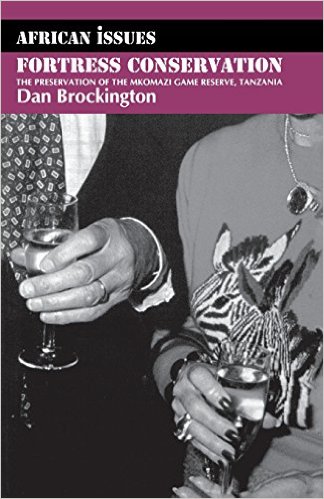
Fortress Conservation by Dan Brockington

Overview

Fortress Conservation

Title: Fortress Conservation: The Preservation of the Mkomazi Game Reserve, Tanzania
Author: Dan Brockington
Rating Out of 5: 3 (On the fence about this one)
My Bookshelves: Anthropology, True stories, Science, Non-fiction
Pace: Slow
Format: Ethnographic text
Publisher: Indiana University Press
Year: 2002
5th sentence, 74th page: Number of species.

Buy The Book Now at The Book Depository, Free Delivery World Wide

Synopsis

Dan Brockington challenges the broad vision of Africa’s environment, history and society which drives conservation policies across the continent. He argues that his vision has been harmful, unjust and unnecessary in its effects on people at the Mkomazi Game Reserve in Tanzania.

Do cattle destroy a wilderness?
Many ecologists question whether herds degrade the environment. They ask whether a wilderness has to be devoid of people. They voice the concern for the rights of the people excluded from the Reserve by politicians and judges.

Are the interests of people to give way to wildlife?
Exclusion policies are the norm of conservation. African governments gain easily collectable revenues from tourism. Western governments and donors form alliances with the African governments to sustain this vision.

Were the Maasai in Mkomazi long ago?
Conservation policy is based on a fallacious interpretation of the Reserve’s history and environment. The evictions have been economically damaging.

Do the foreign Trusts provide valid rehabilitation projects?
The Hollywood film about the work at Mkomazi “To Walk with Lions’ is used for fund-raising. Hello! reports on London parties. Books, films, television and magazines feed the search for a long-held dream of Africa. They gloss over what has happened to the people and their herds who have been moved out.

Thoughts

I found Fortress Conservation to be a good read. It gave a fascinating insight into conservation practices throughout Africa and the idea of ‘fortress conservation’. It was amazingly useful for my BA Hons thesis – focusing on conservation in Australia. The idea that fortress conservation is a ‘white man’s practice’ was fascinating to me. Although I did find some of his writing a little too academic and dry in places (hence the lower rating). I would recommend this book to others interested in conservation though.

This book raised a lot of complex issues – it wasn’t just about conserving the natural world, Brockington also investigated the cultural and social significance of this. Add in aspects of the conservation on colonialism, and I walked away from this book with a LOT of thoughts running through my head.

Not the book for everyone, but definitely worth a read if you have any interest in Africa, conservation or just the issues of the modern political and social climate.

<- More non-fiction reviews More anthropology book reviews ->
Image source: Amazon

Deja Dead by Kathy Reichs

Overview

Deja Dead

Title: Deja Dead
Author: Kathy Reichs
Series: Temperance Brennan #1
Rating Out of 5: 4 (Really good read!)
My Bookshelves:
Anthropology, Science, CrimeStrong women
Pace: Fast
Format: Novel
Publisher: Arrow Books
Year: 1997
5th sentence, 74th page: A bicycle leaned against the rusted iron fence that surrounded the tiny front yard.

Buy The Book Now at The Book Depository, Free Delivery World Wide

Synopsis

Bagged and discarded, the dismembered body of a woman is discovered in the grounds of an abandoned monastery.

Dr Temperance Brennan, Director of Forensic Anthropology for the province of Quebec, has been researching recent disappearances in the city.

Soon she is convinced that a serial killer is at work. When no one else seems to care, her anger drives her to take matters into her own hands. But her determined probing has placed those closest to her in mortal danger.

Can Tempe make her crucial breakthrough before the killer strikes again?

Thoughts

Do not read this book if you are female and home alone. I repeat. Do not read this book if you are easily scared.

This was the first crime book I’ve ever read. I picked it up because of the TV series Bones. But I didn’t expect just how good and realistic this book would be! Not only does Kathy Reichs take you deep into the world and mind of Temperance Brennan, she also lets you travel into the world of forensic science.

The details in this are so realistic that you can just tell that Reichs has a background in science. But fear not! If you are not a scientist or science enthusiast, everything is so beautifully (and correctly) explained so everyone can follow. Mix in the twists and turns of the case and the Brennan’s personal relationships with her co-workers, and this book is such a hit.

It’s little wonder that this series has been so insanely popular!

But again, if you want a good night’s sleep… maybe don’t read this right before bed…

<- First BonesDeath du Jour ->

Image source: Amazon

Native Title

Native TitleOriginally published by RiAus on 9 July 2015.

Native title claims in Australia are met with a number of reactions; fear, confusion, misunderstanding, support or admiration, it is a tricky area with a lot of legal and social implications to the greater public. But, that doesn’t really explain what they actually are and the process. So settle in, here’s a breakdown of Native Title in honour of NAIDOC week 2015.

What is Native Title?

Native title is the way that we legally and socially recognise the traditional rights and interests to the land and waters of Aboriginal and Torres Strait Islanders. Through claims and the Native Title Act 1993, these Indigenous Australians are able to reclaim their traditional homes and have their homes and ties to the land legally recognised. This is incredibly important for a group that is so immensely tied to the land through every pore of their being. Whilst it in no way erases the tragedies of the past, native title claims can help to restore Aboriginal and Torres Strait Islanders to their ancestors’ lands.

The History of Native Title

For a country to be settled in 1770, it must fit one of three descriptions:

  • The country is uninhabited, therefore anyone can make a claim.
  • The country is inhabited and the Europeans can purchase land from the Indigenous owners, but they cannot take the land.
  • The country is inhabited and the Europeans can claim the land by conquest or invasion, in other words, war. But the rights of the Indigenous peoples must still be respected.

Alexander_Schramm_-_A_scene_in_South_Australia,_1850

However, when Europeans first came to Australia none of these terms were honoured, instead they claimed terra nullius, effectively meaning that they treated the land as uninhabited. This was possible due to the fact that Indigenous Australians weren’t viewed as human. This meant that all land was viewed as unowned, and claimed by the crown.

However, in 1992 the views on this land ownership completely changed. It was in 1992 that the Mabo decision was made. This occurred when Eddie ‘Koiki’ Mabo, a Torres Strait Islander, challenged the legal and social assumptions of land rights. So, alongside the rest of the Mer folk, Mabo decided to challenge the ownership and legality of land ownership in the Torres Strait Islands. It took 10 years, but finally, in June of 1992, the High Court acknowledged that terra nullius did not exist when the Europeans arrived in Australia. Therefore, the peoples’ rights to the land were granted, and ownership of traditional country was settled. This also opened the door for the government to pass the Native Title Act 1993. There are currently 396 active Native Title claims and 767 Future Applications (this refers to applications that will affect or change native title rights and interests).

download

How are Native Title Claims Processed?

Applying for native title claims is a long and complicated process. Firstly, the claimants must lodge an application with the high court. Following this, they must prove that they are eligible for native title and that their rights have not been extinguished. Following this, an anthropologist will verify their claims of cultural continuation. Following this application and years of research, the case may then go to court. However, even if all of the information has been gathered, it can take up to twenty years for a case to be heard in court. Contrastingly, if two applications specify the same area of land, then a case can be rushed and pushed forward. This often happens as traditional boundaries were not straight or well-defined in the ways that Europeans see them. The boundaries are not a simple fence between two locations, and so two groups of Indigenous Australians may both have claims within the same region.

Requirements of Native Title

Native title can be awarded when:

  1. Cultural continuation has been proven. This means that through looking at historical records the traditional laws and customs of the group have been continued on into present practices. They do not have to mirror each other, but rather a logical and practical social evolution of laws and customs must be displayed and indicated.
  2. It can be shown that these rights haven’t been ‘extinguished’. This occurs when the government sells the land to another property holder, in other, no native title claim can be made to your house if you have bought it. It is only government property and land (e.g. Pastoral Land) that has not had its rights extinguished.

If there has been partial extinguishment of native title, then individuals are still able to claim some rights. They can assert their right to either:

  • ‘Exclusive’ rights. This is when the native title holders are able to control who has access to the region.
  • ‘Non-exclusive’ rights. This is when the native title holders are not able to control who has access to the land.

Aboriginal_boys_and_men_in_front_of_a_bush_shelter_-_NTL_PH0731-0022

The Science in Native Title Claims

For cultural continuation to be demonstrated, anthropologists will immerse themselves into the Indigenous peoples’ culture. They can spend two years or more getting to know the cultural practices and beliefs of the people. This ethnographic practice is lengthy and demands the trust and acceptance of the community being observed. This is part and parcel of ethnographic fieldwork across all areas of anthropology. However, as the findings will eventually end up in court (not all anthropological studies are conducted for the sake of legal practices), the anthropologist is in a much more tentative position when disclosing valuable information. A great example of this is the Hindmarsh Island Bridge controversy. The leading anthropologist was found in contempt of court due to her inability to disclose ‘Secret Women’s Business’.

Once information is gathered from the present owners of the land, their practices must be contrasted against historical documents and recordings of Indigenous life. However, this too can have some difficulties as many historical documents were written by Europeans, whom, as mentioned previously viewed Indigenous Australians as something less than human (just think of the Stolen Generation). Past texts are rife with terms such as “primitive” and “barbaric” when talking about any culture that was not white and European. But, they can still be an invaluable tool when trying to establish cultural continuation in native title claims.


Native title claims rely on a mix of science and law. Through this unique and complicated mix of social and legal practices, the rights and interests of Indigenous Australians can be recognised and awarded. And these fantastic and diverse people can embrace their ties to their land and country.