All posts by skyebjenner

Life on the Seven Seas

Life on the Seven SeasOriginally published by RiAus on 31st July 2015.

Everything is affected by climate change. From the mountains to the bottom of the ocean, our every action can have an impact on the world around us. The 25zero campaign helps to highlight the impact through the loss of our snow-capped mountains along the equator. But it’s not just the mountains that are affected by climate change and global warming, the oceans are too.

There has been a lot of publicity about rising sea levels in the past years. And why wouldn’t there be, with 44% of the world’s population living within 150 kilometres of the coast. In Australia, we are even more drastically affected by the idea of rising sea levels with an astonishing 85% of our population living in coastal cities. Needless to say, rising sea levels are an immensely worrying and relevant issue for billions of people.

Scientists have found that sea levels have risen an average of 3.5 millimetres every year since the early 1990s. That doesn’t sound like much, but in the past 25 years, that means that sea levels have risen 8.75 centimetres. If this trend continues, in 85 years, sea levels could rise 2 metres, effectively wiping out most of Australia’s cities and towns, alongside 44% of the world’s settlements.

SONY DSC

This spectacular phenomenon happens because of two reasons; thermal expansion and melting ice. Thermal expansion occurs because as Earth’s atmosphere heats up (about 0.7 degrees in the last century, ten times faster than any other period in history), so too does the water. And as anybody who has taken basic chemistry can attest, as things heat, they expand. Alongside this, the increased heat means that more of the ice caps and glaciers are melting, leading to a vicious circle of heating, expansion and rising sea levels.

Yet, surprisingly, it’s not all doom and gloom. Yes, there is a chance that there will be less and less land to live on, but Earth has always been the ‘Blue Planet’ and some groups of people have decided to embrace this. Carving out lives on the seven seas, the Bajau of South East Asia have embraced the open oceans and almost never set foot on land. They are born aboard boats, get married, have children and eventually die out at sea. Proving that we can survive the rising sea levels. In fact, some Bajau are so adapted for a life at sea that they appear almost amphibian!

These ‘Guardians of the Sea’ have been trailing the high seas since at least the 16th century, trading and thriving at sea for many generations. In fact, they spend some Bajau spend so little time on land that they get ‘land sick’! For them, the islands throughout the South East Asian oceans are merely a layover to trade for rice, grain and petrol before returning to their aquatic way of life. But never fear! If you don’t want to spend all of your days rocking from side to side on a boat, some Bajau living just off the coast in houses on stilts. These homes still take advantage of the many bounties that the ocean has to offer, but keeps the owners dry and out of danger in all but the most horrific weather.

body - life-of-the-stateless

Alternatively, we could always make our own island like the Uru people of Peru. Originally building these ‘floating islands’ to escape persecution, the Uru people have now made more than forty-two buoyant masses that they live, play and even raise chickens on! Lake Titicaca is 58,000 kilometres squared, so there is plenty of room for these drifting abodes, and the Uru have even managed to make money from their unique living situation through tourism. But how do they do it?

Lake Titicaca has many reed beds throughout its vast expanse, and the Uru have taken advantage of this. Taking these reeds, they literally weave their own island to stay afloat. By trapping air bubbles within this botanic mass, buoyancy is assured and up to six families can live on one makeshift raft. But, reeds do rot away, especially when they are in constant contact with water, so they must constantly be replaced and replenished to keep this sustainable home ‘sea-worthy’.

body - Peru_Uros_Islands_Lake_Titicaca

And there are many more peoples of the world who have embraced a more aquatic way of life. Using human ingenuity, adaptability and resourcefulness, humans have proved yet again that we can thrive in almost any circumstance. Still not keen on living on the seven seas? Well, tune into Channel 25zero to discover more about climate change and help us and the amazing 25zero team to raise awareness for COP21 in November this year! Join the fight to stop the rising sea levels! If only so you don’t have to spend your life aboard a boat.


Find out more about climate change with Channel 25zero!

Willie Wonders Why

Willie Wonders WhyOriginally published by RiAus on 22 July 2015.

‘The Braggs’ are a big deal in South Australia. There are busts on the main street, a very fancy, new building named after them at the University of Adelaide and even a beautiful children’s book about their accomplishments. Even RiAus gets caught up in Bragg Fever every year and honours them. But that doesn’t really tell us much, yes, they’re famous and apparently important to science, but why?

Who were the Braggs?

Sir William Henry Bragg (the elder one) was born in England, but immigrated to Australia and in 1886 became a ‘Sir Thomas Elder Professor of Pure and Applied Mathematics’. Obviously a great honour and a hint to the immense intellect of this man. His son, William Lawrence Bragg was Adelaide born and bred. He attended the University of Adelaide under his father and eventually joined him in his research. This was the first step on their journey to notoriety.

Why are they famous?

Well, for starters, the Braggs are Nobel laureate winners. They won the prize in Physics in 1915. Not only were they the first father and son duo to do so, but William Lawrence Bragg was the youngest person at the time to be awarded with such an honor. He was 25 at the time. Their work with X-rays used crystallography to figure out the density, size and shape of atoms. It was revolutionary work that still has an effect on us today.

body - Bragg-composite-01

But, they also did a tonne of other research across applied mathematics and physics. Not to mention their lasting imprint upon the scientific community as lecturers and teachers. There’s a very good reason that they were inspiring enough to have a children’s book written about their lives.

Why do we care?

Beyond the fact that winning a Nobel Prize is an amazing achievement, there are a number of reasons why we should care about The Braggs. For starters, they are from Adelaide. It’s nice to know that you could be walking down the very streets that the Bragg men did while they contemplated the use of crystallography in further understanding and embracing X-rays. But, more than that, their research has changed every single one of our lives. Without their research, the X-rays of today would not be as clear and simple to understand. We would also have a much smaller appreciation for the atoms that make up, well, everything in the entire universe.

So, even there’s a pretty good reason why Sir William Henry and William Lawrence constantly get mentioned throughout South Australia. They may have won the Nobel Prize 100 years ago, but their work and their presence has a lasting and incredibly important impact on all of us. No matter where in the world we live.

Native Title

Native TitleOriginally published by RiAus on 9 July 2015.

Native title claims in Australia are met with a number of reactions; fear, confusion, misunderstanding, support or admiration, it is a tricky area with a lot of legal and social implications to the greater public. But, that doesn’t really explain what they actually are and the process. So settle in, here’s a breakdown of Native Title in honour of NAIDOC week 2015.

What is Native Title?

Native title is the way that we legally and socially recognise the traditional rights and interests to the land and waters of Aboriginal and Torres Strait Islanders. Through claims and the Native Title Act 1993, these Indigenous Australians are able to reclaim their traditional homes and have their homes and ties to the land legally recognised. This is incredibly important for a group that is so immensely tied to the land through every pore of their being. Whilst it in no way erases the tragedies of the past, native title claims can help to restore Aboriginal and Torres Strait Islanders to their ancestors’ lands.

The History of Native Title

For a country to be settled in 1770, it must fit one of three descriptions:

  • The country is uninhabited, therefore anyone can make a claim.
  • The country is inhabited and the Europeans can purchase land from the Indigenous owners, but they cannot take the land.
  • The country is inhabited and the Europeans can claim the land by conquest or invasion, in other words, war. But the rights of the Indigenous peoples must still be respected.

Alexander_Schramm_-_A_scene_in_South_Australia,_1850

However, when Europeans first came to Australia none of these terms were honoured, instead they claimed terra nullius, effectively meaning that they treated the land as uninhabited. This was possible due to the fact that Indigenous Australians weren’t viewed as human. This meant that all land was viewed as unowned, and claimed by the crown.

However, in 1992 the views on this land ownership completely changed. It was in 1992 that the Mabo decision was made. This occurred when Eddie ‘Koiki’ Mabo, a Torres Strait Islander, challenged the legal and social assumptions of land rights. So, alongside the rest of the Mer folk, Mabo decided to challenge the ownership and legality of land ownership in the Torres Strait Islands. It took 10 years, but finally, in June of 1992, the High Court acknowledged that terra nullius did not exist when the Europeans arrived in Australia. Therefore, the peoples’ rights to the land were granted, and ownership of traditional country was settled. This also opened the door for the government to pass the Native Title Act 1993. There are currently 396 active Native Title claims and 767 Future Applications (this refers to applications that will affect or change native title rights and interests).

download

How are Native Title Claims Processed?

Applying for native title claims is a long and complicated process. Firstly, the claimants must lodge an application with the high court. Following this, they must prove that they are eligible for native title and that their rights have not been extinguished. Following this, an anthropologist will verify their claims of cultural continuation. Following this application and years of research, the case may then go to court. However, even if all of the information has been gathered, it can take up to twenty years for a case to be heard in court. Contrastingly, if two applications specify the same area of land, then a case can be rushed and pushed forward. This often happens as traditional boundaries were not straight or well-defined in the ways that Europeans see them. The boundaries are not a simple fence between two locations, and so two groups of Indigenous Australians may both have claims within the same region.

Requirements of Native Title

Native title can be awarded when:

  1. Cultural continuation has been proven. This means that through looking at historical records the traditional laws and customs of the group have been continued on into present practices. They do not have to mirror each other, but rather a logical and practical social evolution of laws and customs must be displayed and indicated.
  2. It can be shown that these rights haven’t been ‘extinguished’. This occurs when the government sells the land to another property holder, in other, no native title claim can be made to your house if you have bought it. It is only government property and land (e.g. Pastoral Land) that has not had its rights extinguished.

If there has been partial extinguishment of native title, then individuals are still able to claim some rights. They can assert their right to either:

  • ‘Exclusive’ rights. This is when the native title holders are able to control who has access to the region.
  • ‘Non-exclusive’ rights. This is when the native title holders are not able to control who has access to the land.

Aboriginal_boys_and_men_in_front_of_a_bush_shelter_-_NTL_PH0731-0022

The Science in Native Title Claims

For cultural continuation to be demonstrated, anthropologists will immerse themselves into the Indigenous peoples’ culture. They can spend two years or more getting to know the cultural practices and beliefs of the people. This ethnographic practice is lengthy and demands the trust and acceptance of the community being observed. This is part and parcel of ethnographic fieldwork across all areas of anthropology. However, as the findings will eventually end up in court (not all anthropological studies are conducted for the sake of legal practices), the anthropologist is in a much more tentative position when disclosing valuable information. A great example of this is the Hindmarsh Island Bridge controversy. The leading anthropologist was found in contempt of court due to her inability to disclose ‘Secret Women’s Business’.

Once information is gathered from the present owners of the land, their practices must be contrasted against historical documents and recordings of Indigenous life. However, this too can have some difficulties as many historical documents were written by Europeans, whom, as mentioned previously viewed Indigenous Australians as something less than human (just think of the Stolen Generation). Past texts are rife with terms such as “primitive” and “barbaric” when talking about any culture that was not white and European. But, they can still be an invaluable tool when trying to establish cultural continuation in native title claims.


Native title claims rely on a mix of science and law. Through this unique and complicated mix of social and legal practices, the rights and interests of Indigenous Australians can be recognised and awarded. And these fantastic and diverse people can embrace their ties to their land and country.

What is COP21?

What is COP21Originally published by RiAus on 3 July 2015.

Today marks 150 days until COP21, and the start of RiAus’ journey with Tim Jarvis; 25zero. Needless to say, we’re all REALLY excited about the next few months as we go on a virtual journey with Tim across the equator. But it does raise the question, what is COP21 and why should we care?

What is COP 21?

COP stands for the Conference of the Parties to the United Nations Framework Convention on Climate Change, or, COP. It refers to the group of people from 196 ‘States’, or countries who come together to talk about human-induced climate change. It is the aim of these people to change the course of climate change, and save the Earth. A number of initiatives have already been put into place by past COPs. They all aim to reduce the impact of our actions upon the earth. Currently, the aim is to limit the rise in temperature to less than 2°C.

body - 8290528771_1298f2ca6e_o

This year is the 21st COP gathering, hence the name COP21. This year it will be held in Paris between November 30th and December 11th.

The Main Aims

This year, France is holding the biggest diplomatic event they have ever hosted. The aim for this gathering is:

to reach, for the first time, a universal, legally binding agreement that will enable us to combat climate change effectively and boost the transition towards resilient, low-carbon societies and economies.

To achieve this goal, greenhouse emissions must be reduced to decrease global warming. The way to do this will be through legislation and legal initiatives that encourage countries to reduce their carbon footprint. This agreement will then be enforced in 2020 for a better future for us all.

There are also a number of monetary incentives and support systems set up as billions of dollars will be spent to try and usher the 196 States into a new, more eco-friendly future.

Why Should We Care?

Climate change affects us all. As the world is warming, our ecosystems are failing and the world is being irreparably damaged. Scientists’ predictions for the end of the world have ranged from within our lifetime, to our grandchildren’s lives. Either way, something has to change.

How Can I Help?

If you can’t fly to Paris and take part in COP21, then you can still take part and help to raise awareness. Adelaidean, Tim Jarvis has started an amazing new initiative called 25zero which you can take part in from your home! Check out this short video for more information.

Cars on Mars

Cars on Mars

Originally published by RiAus on 18 June 2015.

Mars has been in the media a lot lately, whether it’s because there are plans to fly people there in the next 20 years, or because of the chance that it may be hospitable to humans, The Red Planet has gained a lot of attention. And so it should, it is a fascinating planet and the next frontier of space exploration. But, how do we know so much about this astonishing place? Answer: The Mars Rovers.

Like most people interested in science, or who watch the news, we’ve all heard of ‘The Mars Rover’. But, before today, the majority of my knowledge came from Howard in Big Bang Theory…apparently you can get it stuck in a ditch up there… needless to say, beyond the idea that there were ‘cars on Mars’, it was pretty difficult to understand what each them actually did and how. I didn’t even know that more than one had been sent into space!

Cars on Mars1

There have been four Rovers sent to Mars by NASA; the Sojourner, Curiosity, Opportunity and Spirit. Each has contributed to our knowledge differently and given us an insight into the astonishing Red Planet. Thanks to these Rovers, we now know what it would be like to walk on Mars, more about the planet’s formation and how hospitable it is for future colonisation.

Sojourner

The Sojourner was one of the first Rovers to land on Mars in July 1997 (two Russian Rovers arrived first). It was covered in solar panels, so that it’s night time activities were severely limited. But, more importantly, Sojourner, had three cameras; two black-and-white cameras in the front, and a coloured camera at the back. It is these that sent us back the first images of Mars.

The Sojourner is also featured in the book that is soon to become a blockbuster, The Martian.

Spirit

No one has heard from Spirit since 2010. However, it did land on Mars in January 2004 and lasted over twenty times longer than scientists had predicted. It’s mission was supposed to go for 92 Earth days (90 Mars days or sols) and ended up functioning for 2695 Earth days (2623 sols).

Spirit collected samples from the surrounds to find out what the surface of Mars was made from. It used all of this information to:

  • Find out whether there was water in the past (there was, which is what makes us think that Mars may be habitable)
  • Geological history of the planet
  • Gather data so that there is a measure of the accuracy of the orbiting instruments
  • Find out if the surface of Mars is hospitable for people

Cars on Mars2

Opportunity

Opportunity was the twin of Spirit and landed on The Red Planet three weeks later, in January 2014. But, unlike Spirit, Opportunity didn’t get bogged down in soft sand and is still sending information back to Earth. It has now spent 4160 Earth days (4049 sols) driving across the surface, collecting information.

Opportunity’s aims were the same as Spirit’s, but it has travelled over 40km (compared with the 7.73km covered by Spirit). Both Opportunity and Spirit have been sent images back to Earth as well as the meteorological data they collect.

Cars on Mars3

Curiosity

Curiosity is the latest Rover to be sent to Mars, it landed in August 2012. Its goals include:

  • Investigating the climate and geology of The Red Planet
  • Find out if Gale Crater is favourable for microbial life
  • nvestigate whether humans will really be able to live on Mars

In fact, Curiosity has eight goals, which can be separated into aims to investigate the biological, geological, planetary process and surface radiation. But the above are a really good overall idea.

Curiosity is going to be used as the basis for the next Rover to be sent to Mars in 2020. It is the largest Rover to be sent so far and has been able to gather some amazing information. The images throughout this article have also all been taken by Curiosity and have provided us with a window into what living on this planet would be like.

Cars on Mars4

Simply doing research into these four Rovers has left me in awe of the amount of technology and data gathering equipment that can be attached to one vehicle. These amazing pieces of human ingenuity have allowed us to find out so much about a place that is ridiculously far from Earth. In other words, we know more about a place that is at least 225,300,000 km away than we do about the bottom of the ocean.

The Six Stages of Life

The Six Stages of LifeOriginally published by RiAus on 22 May 2015.

Every animal, from the smallest insect to humans travels through life on a journey from birth to death. We all go through it, but there are six major stages that are familiar across all groups on land and under the sea. Last year’s BBC series, ‘Life Story’ takes you through this exact journey, so does their latest exhibition at Vivid in Sydney, also conveniently called ‘Life Story’. Anyone who loves David Attenborough (as I do) will know that he also focuses on these six stages of life throughout many of his tales. So here are the six stages of life, and some really fascinating animals to match:

First Steps

We all have to take our first steps in the world, for some creatures, like wildebeest and antelope, this happens within moments of birth. If prey animals like this can’t run within moments of delivery, then it’s really likely that a large carnivore will make quick work of their tiny and vulnerable bodies. It is the ability of such small vulnerable creatures to escape from predators that has caused the Hoatzin (Ophisthocomus hoazin) to be one of the most unique birds in the animal kingdom.

It has become well-known within the scientific community that the Hoatzin is a hint at the link between birds and dinosaurs. This is because it has grasping hooks on its wings when first hatched. As their wings become strong enough to carry them through the air, the claws eventually fall off and the Hoatzin looks like just any other bird.

Growing Up

Growing up takes time, a little for some, a lot more for others (as I’m sure most people would understand). But the longest and shortest nursing periods for mammals both belong to the pinnipeds (seals, sea lions and walruses). In these mammals the lactation period (the time that the young is fed milk by its mother) is often the same time as that of motherly care. Once the mother stops providing the infant with sustenance, they must fend for themselves.

The Six Stages of Life1

For the Hooded Seal (Cystophora cristata) they must grow up within a mere four days. Over these four days the pups’ weight almost doubles from roughly 25kg to 50kg because of the high fat content of their mother’s milk (60%). And it needs to! The Hooded Seals live on the pack ice in the Arctic Ocean and they need to be able to fend for themselves once they are left to their own devices.

The animal with one of the longest lactation period on the other hand is the Walrus (Odobenus rosmarus). They nurse their young for anywhere between two and two and a half years. Some of their young have even been known to spend up to five years with their mothers before having to fend for themselves. Although, this is not by any means the longest period of ‘growing up’ in the animal kingdom; that crown belongs to humans. It takes us 18 years or more to be considered ‘grown’ and able to fend for oneself.

Home

By far, one of my favourite animal homes of all times is that of the ‘magnetic termites’ (Amitermes) of Northern Australia. When the queen leaves her home, she finds herself a mate and starts creating one of these majestic homes. They are the pinnacle of nature’s ingenuity in dealing with some of the extremes of the surrounding environment. These termites build their homes in areas that are prone to flooding and are constantly under the harsh Australian sun. This is why the termite mounds are tall to lift the insects out of the flooded plan and angled in a North to South direction. The mounds are eerily aligned in this way to reduce the surface area that is exposed to sunlight throughout the day and therefore the amount of heat that the animals have to experience.

Power

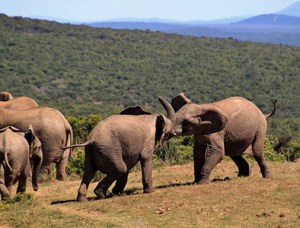
We all vie for power in one way or another in our daily lives. Those with the most power eat first, have their choice of mates and are far less likely to be eaten by predators. Elephants don’t have to worry about being eaten by other predators once they’ve ‘grown up’, but they do fight for power regardless, especially the males. This allows the biggest, toughest and most likely to survive male to mate with more females and make more big, tough and resilient offspring. Dominance fights helps to sort out this hierarchical system within both Asian (Elephas maximus) and African (Loxodonta Africana spp) Elephants. Often at the conclusion of these, the champion flicks the other bull’s penis with his trunk to assert his dominance.

The Six Stages of Life2

However, in some herds of African Elephants, the bachelors also form their own herd which serves a secondary purpose. The patriarch (head male) not only keeps the younger males from passing on their genes to all other females, but he also teaches them how to act and stops them from becoming out of control when in musth. This use of power not only helps to pass on the “fittest” genes to the next generation, but teaches the younger bulls how to act appropriately and thus conserves the species.

Courtship

Courtship takes many forms, from vibrant displays to titanic clashes, but some of the most spectacular and beautiful of these is done by birds. The Bowerbird (Ptilonorhynchidae) decorates a nook with beautiful objects to attract a mate, each of which is placed with great love and care. The Bald Eagles (Haliaeetus leucocephalus) on the other hand lock talons in a death defying ritual as they plummet to the earth.

The most vibrant and beautiful of all of these courtship rituals though is those performed by the Birds of Paradise. These astonishingly beautiful birds have been hunted to the brink of extinction in some areas of New Guinea. Their bright and distinct feathers are not only used in the courtship rituals of these stunning creatures, but also in the courtships of some humans. They attach the feathers to their headdresses and dance for the women to choose the best looking man.

Parenthood

IF you can get through growing up. IF you can find a home. IF you become the biggest baddest beast in the land. And IF you find yourself a mate, then the final trial of life must be experienced; parenthood. Some of the most dedicated parents exist in the animal kingdom. Like all of the six stages of life, there are a lot of admirable parents in the animal kingdom.

The Six Stages of Life3

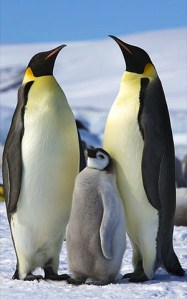
I think that the top of this list is always going to be the male Emperor Penguin (Aptenodytes forsteri). These amazing parents hold their eggs on their feet for 65 – 75 days to incubate the egg. Standing with your toes turned up for this long sounds tedious and painful in the least, but try combining this with the frigid temperatures of the Antarctic at the beginning of Winter. When these chicks finally hatch, the male continues to hold them on their feet and guard them until the female returns from her hunting trip. When the male finally relinquishes his precious cargo, he hasn’t eaten for at least four months! The parents swap these duties until the chick is able regulate its own body heat. But, once they can be left alone, their responsibilities don’t end, they constantly feed up their chick, until almost a year later; it is able to start hunting for itself.


There are so many different ways that animals make their way through the six stages of life. Just think about how you have grown up and how your friends have. The animal kingdom has so many astounding and surprising ways to pass on the genes to the next generation, you could spend your entire life studying them, and indeed, some people do.

Living with Motor Neuron Disease

Living with Motor Neuron Disease

Originally published by RiAus on 24 September 2014.

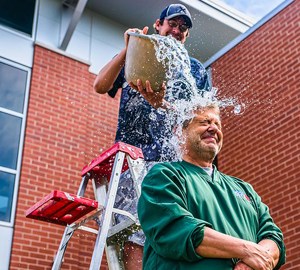
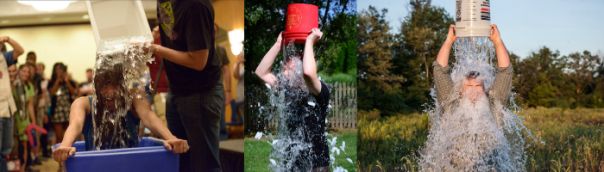
The ‘ice bucket challenge’ has gone viral over the past few months and is now the most watched thing on YouTube, ever. Its popularity has been credited to a simple premise and celebrity involvement helping it to raise millions of dollars. Search Motor Neuron Disease (for Australia) or Amyotrophic Lateral Sclerosis (for America) and you will find heaps of facts, information on what this money goes to and statistics about those whom are suffering from this disease. But what is it really like to live with this disease, what is it like to watch someone you know go through this?

This isn’t a typical article about Motor Neuron Disease, nor is it an article on what the ice bucket challenge actually raises money for. This is about what it is like to live with someone who is going through this debilitating process every day. However, for those of you who haven’t read the many articles available at the moment on Motor Neuron Disease, I’ll give you a brief overview of the condition.

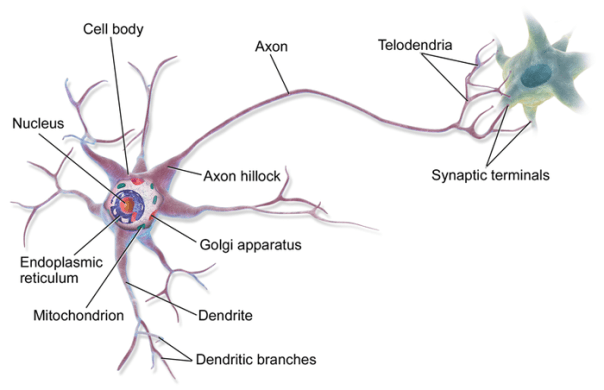
Motor Neuron Disease (otherwise known as Amyotrophic Lateral Sclerosis in America) is a progressive and terminal neurological disease in which the motor neurons slowly die. These are the nerve cells that take the conscious messages from the brain to your muscles in order to move.

Living with Motor Neuron Disease1

This means that the muscles of the back, legs, arms and neck, along with the muscles that control speech, swallowing and breathing stop working. This then leads to the paralysis of those regions, and eventually death. There is no known cause of, or cure for MND. Likewise, once a symptom presents itself and prevails within their life, there is no remission and the patient becomes quickly, and progressively worse. Often, people suffering from MND simply cease to breathe (due to the lack of muscle control and function) between one moment and the next.

My personal MND story began when I first met Steve 2 and a half years ago. At the time he was struggling to breathe when lying down and unable to sleep unless he was sitting up. He was visiting numerous doctors and gradually losing weight. After 18 months of running from appointment to appointment, they finally figured out what was wrong with him. In November 2013, Steve, a 47 year-old man was diagnosed with Motor Neuron Disease. Immediately, the doctors informed him and his two sons that the prognosis wasn’t good, the lifespan after diagnosis is generally 27 months. But, having atypical symptoms (patients generally lose muscle control in the limbs before respiratory control, unlike Steve), his survival rate was decreased even further.

Immediately we contacted the MND foundation of Australia and tried to find out what help we could get. We were offered support and since then a steady stream of nurses, therapists and health professionals have marched through our lives and our home to make life more manageable. Our home is now kitted out with an electronic hospital bed, a wheelchair that looks like it belongs in Transformers and a computer that Steve can control with his eyes. This computer is also linked up to have control over anything that uses a remote, effectively the entire house. A little space age silver lining in an otherwise hopeless situation.

The statistics say that 2 people are diagnosed with MND every day in Australia, and every day 2 of these people pass away from their ailment. 2 people in about 23 million does not seem like a large amount, but, doing the maths, that’s approximately 730 who pass away every year. This tragic statistic does not take into account how quickly this disease acts and the strain that it can place upon family and friends. In the past 10 months, a relatively healthy 47 year-old has progressed to a 48 year-old whom can barely feed himself.

Whilst there is no cure for MND, there are treatments that can help to prolong life expectancies and help to reduce the onset of developing symptoms.

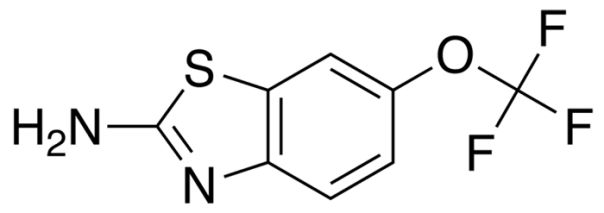
One such treatment is the drug commonly called Riluzole, which can prolong the median survival rate of MND patients by two to three months. Riluzole works by decreasing the activity of the motor neurons by blocking the release of an amino acid called glutamate. When one neuron releases glutamate other nearby neurons can detect it and they respond by becoming more ‘excited’ and ready to transmit message. Too much glutamate release causes the neuron to become hyper-stimulated which eventually results in it’s death. By blocking glutamate release Riluzole can stall this nerve deterioration for a short time.

Living with Motor Neuron Disease2

Multiple daily injections are delivered by nurses, along with tablets that help Steve to live as normal a life as we can manage. In January we were told that he had 6 month to live, he’s now lived 9 months since that prognosis, thanks in no small part to the medication that he receives. We recently found out that when he’s asleep, he stops breathing. Completely. Without the assistance of his oxygen mask, well, it goes without saying…

The assistance and support of numerous health professionals and the MND foundation of Australia has enabled us to support Steve whilst he still lives at home. Without this, an elderly home or some form of care would be required. The amount of publicity this incredibly terrifying disease has gained through the ‘ice bucket challenge’, celebrity endorsements and diagnosis is incredibly gratifying and appreciated. Everybody’s story is different when it comes to this disease and knowing that there are those out there who are willing to help and provide support is a daily gift for which I, personally, am very thankful for.

Living with Motor Neuron Disease3